


-

Add: HeBei ShengShi HongBang Cellulose Technology CO.,LTD.
-

Email
13180486930@163.com -

CONTACT US
+86 13180486930

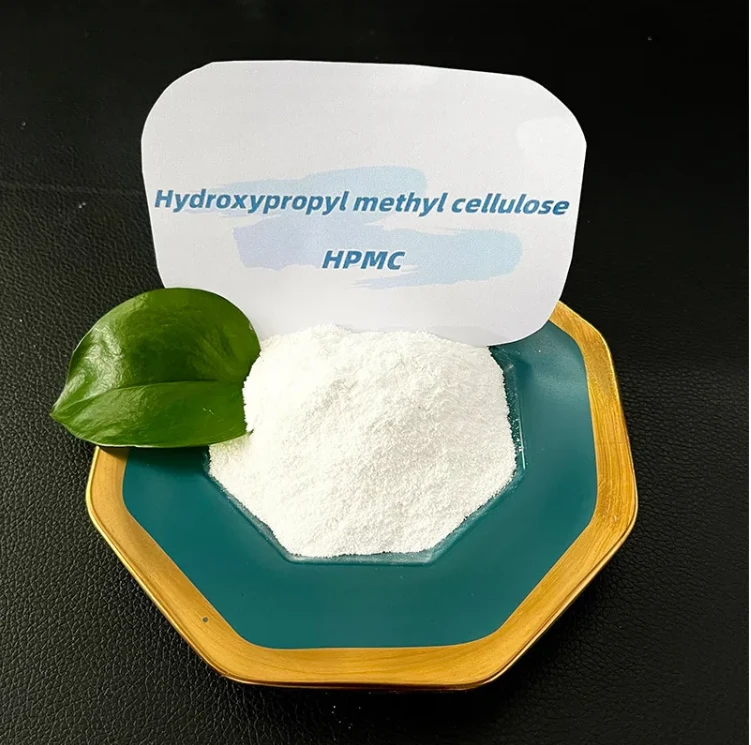



Hydroxypropyl methylcellulose (HPMC) is widely recognized as a versatile compound that finds its application across various industries. Preparing HPMC solutions is paramount for ensuring its effective performance, whether in pharmaceuticals, food processing, or construction. This article sheds light on the expertise required, authoritative guidelines, and trustworthy methodologies associated with HPMC solution preparation. Experience in HPMC solution preparation reveals that the process is both an art and a science, demanding precision and knowledge. Users often face challenges such as insolubility, clumping, or achieving the desired viscosity. These challenges can be mitigated by following specific preparation steps . Here, I will share a streamlined process derived from years of hands-on experience 1. Selection of Grade The choice of HPMC grade significantly influences the end properties of the solution. Different grades offer varying viscosities and gel temperatures, making it crucial to consult technical specification sheets provided by manufacturers to select the right grade for your application needs. 2. Water Quality The quality of solvent, usually water, plays a critical role. Using deionized or distilled water enhances solubility and prevents any potential reactions from contaminants. Experience confirms that temperature-controlled environments boost the solubility rate and uniformity of HPMC throughout the solution. 3. Dispersion Technique Accurate dispersion ensures the complete hydration of HPMC without forming clumps. Begin by sprinkling HPMC slowly into the solvent while stirring continuously. An authoritative tip involves using mechanical stirrers to maintain a consistent dispersal, achieving a lump-free solution efficiently. 4. Temperature Control The temperature of the solvent should be monitored closely. HPMC tends to dissolve better in cold water. By initially employing cold water to disperse the HPMC and later heating it up if the application demands a higher temperature, one can secure optimal results. hpmc solution preparation 5. Hydration Time Time is a crucial factor in preparing an HPMC solution. Allow the solution to hydrate fully, which might take several hours depending on the grade and environmental conditions. Patience is key as incomplete hydration could result in suboptimal solution properties. 6. pH Adjustment For applications requiring specific pH levels, adjust the pH of the solution after full hydration. Different grades of HPMC might react differently to pH adjustments, so it's advisable to conduct small-scale tests before full-scale operations. From a professional standpoint, the expertise of troubleshooting common issues cannot be overstated. In some cases, adding a non-ionic surfactant can assist in reducing surface tension and improving solubility. Furthermore, employing an industrial homogenizer can yield a finer, more consistent HPMC solution in high-demand applications. To establish authority in the preparation of HPMC solutions, it’s paramount to adhere to standardized practices as endorsed by industry leaders. Following guidelines from entities like the United States Pharmacopeia (USP) can ensure compliance and efficacy in pharmaceutical applications. Maintaining a record of every batch's preparation details ensures traceability and identifies areas for future optimization. Trustworthiness is built through consistency and transparency. Regularly testing and documenting the rheological properties of prepared solutions guarantees batch-to-batch uniformity. For enhanced credibility, consider third-party verification from accredited laboratories to validate the effectiveness and safety of the final solution. In conclusion, HPMC solution preparation demands a blend of practical experience, specialized knowledge, and adherence to authoritative protocols. By following these best practices, one can ensure the creation of high-quality HPMC solutions suitable for a variety of applications, ultimately fostering trust and reliability in the end product.
- 40000tons

Production
- 20+years

Experience
- 5000+㎡

Acreage

-

The Exploration of VAE for Dimensionality Reduction In the field of machine learning, Variational Autoencoders (VAEs) have emerged as a powerful tool for generative modeling and dimensionality reduction. VAEs are a type of neural network architecture that provides a probabilistic graphical model for data representation, enabling the capturing of intricate patterns in high-dimensional spaces. At its core, a VAE consists of two main components an encoder and a decoder. The encoder maps the input data to a lower-dimensional latent space, while the decoder generates data from this latent representation. The key aspect of VAEs is that they adopt a probabilistic approach, encoding inputs as distributions (typically Normal distributions) rather than deterministic points. This introduces a level of variability and allows for the generation of diverse outputs from a learned representation. . A crucial aspect of training VAEs is the objective function, which combines two key components the reconstruction loss and the Kullback-Leibler (KL) divergence. The reconstruction loss measures how well the output matches the input, typically using a loss function like mean squared error for continuous data or binary cross-entropy for binary data. The KL divergence, on the other hand, quantifies how closely the learned distribution approximates a prior distribution, often chosen as a standard Gaussian. This dual objective encourages both accurate data reconstruction and effective learning of the latent variable distribution. vae дахин тархах нунтаг One of the significant advantages of using VAEs for dimensionality reduction is their ability to capture complex data distributions. Traditional methods like Principal Component Analysis (PCA) often fail to capture nonlinear relationships in the data. VAEs, by leveraging deep learning, can model intricate structures more effectively, making them suitable for high-dimensional datasets such as images or complex time series. Applications of VAEs span a wide range of fields. In computer vision, they can generate new images by sampling from the latent space, making them valuable for creative tasks such as image synthesis and style transfer. In the biomedical domain, VAEs can analyze high-dimensional genomic data, identifying underlying patterns that can inform disease prediction models. Additionally, they hold promise in collaborative filtering systems, enhancing recommendations by learning user preferences in a continuous latent space. Despite their strengths, VAEs also come with challenges. For instance, one may experience the posterior collapse phenomenon, where the KL divergence becomes too small, leading the model to ignore the latent variable entirely. To mitigate this issue, various techniques have been developed, such as using more complex priors or employing hierarchical VAEs. Moreover, interpreting the learned latent spaces can be difficult due to their abstract nature. While they provide a compressed representation of the data, understanding what features or dimensions correspond to specific aspects of the data remains an ongoing research area. In summary, Variational Autoencoders represent a significant advancement in the realm of machine learning, particularly for dimensionality reduction and generative modeling. Their ability to capture the underlying structure of complex high-dimensional data makes them a powerful tool in various domains. As research progresses, improvements in architecture, training methods, and interpretability are likely to further enhance their applicability, paving the way for innovative solutions to real-world problems. The intersection of creativity and computational power that VAEs embody makes them a fascinating area of exploration in modern data science.
-

Understanding the viscosity of HPMC E5, or Hydroxypropyl Methylcellulose E5, is crucial for industries ranging from pharmaceuticals to construction. It plays a pivotal role in product formulation, performance, and quality. Viscosity, essentially the measure of a fluid’s resistance to flow, influences the behavior and stability of products comprising HPMC E5. HPMC E5 is renowned for its consistency in viscosity, a property that significantly affects its functionality. In the pharmaceutical industry, for example, the viscosity of HPMC E5 is a determining factor in controlling the release rate of active ingredients in extended-release formulations. This attribute ensures that medications deliver consistent therapeutic benefits over time, contributing to enhanced patient compliance and treatment efficacy. Expertise in handling HPMC E5 requires a deep understanding of how temperature, concentration, and molecular weight influence its viscosity. Research demonstrates that an increase in temperature can reduce the viscosity of HPMC solutions, which in turn impacts the product's stability and performance. Thus, storage and manufacturing conditions need meticulous control to maintain optimal viscosity . Moreover, in the construction industry, HPMC E5's viscosity is crucial for modifying the flow properties of cement-based materials. Its addition enhances the workability and water retention of cement, which is essential for uniform curing and increased strength of the final product. Builders and manufacturers rely on HPMC E5 to improve the consistency and adhesion of various construction materials. A noteworthy aspect is the role of HPMC E5 in the food industry, particularly in dietary products and gluten-free formulations. The viscosity it imparts helps in mimicking the texture and mouthfeel of gluten, offering a satisfactory alternative to traditional wheat products. This not only enhances the sensory attributes but also boosts the nutritional profile by supporting gut health due to its fibrous nature. hpmc e5 viscosity From an authoritative standpoint, understanding the regulatory standards governing HPMC E5 application is vital. Its GRAS (Generally Recognized As Safe) status by the FDA assures its safe use across different industries. Businesses seeking to integrate HPMC E5 into their products must align with regulatory guidelines to capitalize on its benefits while ensuring consumer safety and trust. Practical experience with HPMC E5 highlights the importance of comprehensive testing and quality assurance protocols. These measures are imperative to ensure the consistency of viscosity from batch to batch, which in turn guarantees the reproducibility of product performance. Companies invest in advanced rheological studies to tailor HPMC E5 solutions that meet specific viscosity requirements for diverse applications. Trustworthiness in implementing HPMC E5-related solutions comes from empirical evidence and successful case studies. Companies document and share real-world applications and outcomes where controlling viscosity with HPMC E5 has led to significant improvements in product quality. These documented experiences serve as a foundation of trust for stakeholders evaluating the incorporation of HPMC E5 in their product lines. In summary, HPMC E5 viscosity is a cornerstone attribute that impacts multiple facets of product development across various industries. Mastery in managing its viscosity enhances the functionality and efficacy of pharmaceutical formulations, improves construction material properties, and optimizes the sensory and functional characteristics of food products. Its well-documented safety and regulatory approval further bolster its credibility, making HPMC E5 a valuable asset in innovative product development.
advantages
-

200000 Viscosities
Excellent product
We can produce pure products up to 200,000 viscosities
-

40000 tons
High yield
We don’t stop production all year round, and the annual output can reach 40,000 tons
-

24 hours
Quality service
We provide 24-hours online reception service, welcome to consult at any time
———— Inquiry Form
Schedule A services

-
 ether_d_amidon
Oct . 25, 2025
The Insights into Rubber Powder Prices Market Trends and Influencing Factors Rubber powder is a fine -
 hormigon_armado_con_polipropileno
Oct . 25, 2025
Methocel F50 is a trademarked brand of methylcellulose ether, commonly used as a thickener, emulsifi -
 welded_wire_mesh_for_concrete
Oct . 25, 2025
When it comes to enhancing the durability and strength of concrete, polypropylene fiber is an indisp


